Picture
The people walking in darkness have seen a great light; on those living in the land of the shadow of death a light has dawned.

We know what it is like to walk in darkness. We know what it is like to live in the shadow of death. But we also are beginning to experience what it is like to see. The darkness of denial is giving way to the light of honesty in our lives.

Of course, when you have lived in darkness as long as we have, the light can be painfully bright. We see the truth about ourselves and our self destructive behavior. We see the truth about our refusal of love. We see the truth of our brokenness. We see old pain. We see current behaviors that damage ourselves and others. The light dawns. It is not a pretty sight.

But God does not send light into our darkness to shame us. The exposure may trigger our deep shame, but this is not God's purpose. God's light is like the light of dawn. It is a light that signals that something new is happening. A new beginning is possible. The light that God brings into our dark world is a light of hope.

Recovery is God's light coming into our darkness. The light exposes. We begin to see clearly the ways we have sinned and the ways other people have sinned against us. And the light provides hope. In the light we see the possibility for new beginnings.

Lord, your light hurts my eyes.
It is too bright.
I see too clearly now.
It is too painful for me.
Help me to believe that your light is not to bring shame
but to bring hope into my dark world.
Light of Heaven, embrace me with your warmth.
Heal me with your bright rays.
Give me life.
And hope.

Amen.

Copyright Dale and Juanita Ryan
National Association for Christian Recovery


Picture
“Everything happens for a reason.” How many times have you heard this short, pithy saying echoed in response to tragedy? Hospital rooms and crime scenes across the world are littered with these words. Such a seemingly innocent idea appears to provide many Christians with serenity and strength in the midst of great calamity. It is truly a concept that has brought many Christian sufferers a profound sense of security and comfort in moments of intense grief. The notion that there is a reason, or a purpose, for all events seems to say something positive about the sovereign care of God. To affirm this popular Christian idea is to affirm that, even in the midst of utter chaos and confusion, God has everything under control; all events are a part of God’s magnificent, immutable plan for his creation. When viewed in this light, it is no wonder why so many well-meaning believers hold on to this popular Christian motto.

But what are the dangers, if any, of such an understanding? It seems to me that this seemingly harmless idea carries with it some heavy theological implications. A quick analysis of the key terms used in this common Christian saying will be more than sufficient in demonstrating this. The word “everything” obviously means “all occurrences,” or “all events”—from the greatest acts of self-sacrificial love, or pure altruism, to the most horrendous evils imaginable.

The phrase “for a reason” seems to imply that the event in question was necessary to some greater good; it is a part of a greater divine plan. In this schema, there are no accidents, no pointless events; nothing happens merely by chance. This means that God is involved in every single event; the hand of God is somehow behind all occurrences. Thus, meaning can be found everywhere. There is hope that even the most horrific evils serve some higher purpose.

Overall, this weighty Christian motto seems to lead to two possible theological conclusions: Either (1) all events are caused by God or (2) God deliberately chooses not to intervene in particular situations, and thus not to prevent certain evils, in order to fulfill his set purposes, which would not have materialized had he intervened. In other words, either all things are divinely determined or God allows particular evils to occur in particular situations because they are necessary to greater goods which justify their occurrence.

Both of these options are based on the notion of particular providence, or meticulous divine governance, and thus both of them deny the existence of gratuitous evils. Again, if everything indeed happens for a reason, then there is no such thing as a pointless, purely accidental, or even unnecessary evil.

Based on this analysis, it should not be surprising that this common Christian understanding has often led to some controversial public pronouncements, to say the least. For instance, in the time before the election, a certain Republican senate candidate allegedly claimed that rape is the will of God. Whether or not this is actually what the prospective senator meant is unclear (personally I do not think that it was). Nevertheless, the words of this senatorial candidate have been interpreted in this very manner.

This recent charade is just another example of how problematic, and even dangerous, this theological viewpoint can be. Not only can it be detrimental to Christian witness in the world—as it can easily portray God as the author of evil—but it can also be injurious to personal faith for the same exact reasons. One can imagine the trauma that a person can undergo when that person sincerely believes that God is the cause of her husband’s physical suffering or her daughter’s mental disability. The trauma might even be more intense in cases that involve the repugnant stain of moral evils (all evil that stems from the will of human beings) like rape.

With all of this in mind, my purpose in writing is to correct what I see as a highly-problematic misunderstanding in popular Christian theology. In order to effectively deal with the troubling words of the Indiana senatorial candidate mentioned above, I will narrow my focus to the concept of moral evil in particular.

It is impossible to prove that the idea of particular providence, or meticulous divine governance, actually corresponds to reality. Unfortunately, it is also impossible to prove that it does not. Thus, when discussing such matters, we must be willing to put aside our desire to make objective, matter-of-fact claims. What we can do, however, is discuss what we think is reasonable.

I would argue that the ontological existence of gratuitous, pointless, unnecessary evil makes much more sense of Christian theology and human experience than its nonexistence does. Likewise, I would also argue that the notion of genuine libertarian free will, which allows for the existence of gratuitous evils, makes more sense of reality and Christian theology than its alternatives--either the idea that God causes everything or the idea that God meticulously overrides all human actions that would have resulted in moral evils except for those that are necessary to greater goods. 

Human beings are free moral agents and thus possess the God-given capacity to make free moral choices. God endowed human beings with personal and moral freedom because he values sincerity of choice and sincerity of action. God is not in the business of creating robots that are programmed to think and act in a set, predetermined manner. Instead, God created human beings in his image, which involves personal and moral freedom, so that they may be able to choose the good out of the sincerity of their heart, rather than out of the coercion of the divine will.

In a world where sincere human freedom exists, and thus in a world where God does not jeopardize the integrity of the moral order by continually tinkering in human affairs, the potentiality for gratuitous, or pointless, evil exists; gratuitous evil will always be a possibility in a world occupied by free moral agents who are generally unabated by the coercive will of God. In fact, the same moral freedom that allows for some of the most selfless acts of love also allows for some of the most horrific acts of evil. Mother Teresa used her moral freedom to minister to the poor of India; Ted Bundy used his moral freedom to murder innocent young women. Freedom is a beautiful thing, but it can also be a dangerous thing.

In light of this, I tend to believe that, more often than not, evil is an abuse of human freedom, rather than an abuse of divine freedom; God does not force people to do bad things, people sincerely choose to do bad things. We must allow man to be evil and God to be good. When we ascribe evil to the will of God, we basically blame God for things that he plays no part in, things that he actually despises. To be quite honest, this is insulting to the nature and character of God.

If human beings truly are free moral agents, equipped with the ability to make free moral choices, and if God truly values the sincerity of human action and the integrity of the moral order, then it follows that some things do not happen for a higher, divine purpose. Again, if God truly allows his creatures to act as they may, without intervening every time they are about to commit a moral evil that is not necessary to a greater good, then some evil is entirely pointless. Because moral evil is often the sole result of human perversity, evil is not always necessary to greater goods. In a world endowed with human freedom, some evil is simply meaningless.

So, in response to the recent controversial remarks from the Indiana senatorial candidate mentioned above, we can rightly say that rape is not the will of God. Instead, it can be said that rape is a perverse expression of the depraved human will. In general, the act of rape is a meaningless, pointless, gratuitous evil that opposes God’s good purposes for his creation; it is a good example of a thing that happens for no higher purpose, or reason.

Fortunately, however, we do serve a God who both can and will redeem all evils, and who, in some way, can beautify even the ugliest perversities of the human will. Even though some things may not happen for a reason, and even though God’s perfect will does not always come to fruition in the midst of a rebellious world, God is never far from us. He is here. He has not abandoned us, and never will he. Though it may not always seem like it, God is working to make all things new. He will not allow evil to reign in this world forever. Although our world may be consumed with evil, even gratuitous evil, God is surely able to turn that which is ugly into something that is beautiful, even glorious; we worship a God who seeks to use the bad for good. This is what Christians call redemption, and this is the eternal plan of the Triune God.

This post was written by Ryan Ragozine who is a Master Arts in Theological Studies student at Asbury Theological Seminary. He received a B.A. in theological studies from Southwestern Assemblies of God University and plans to pursue a Ph.D in historical theology.


For the original post, go to:  http://seedbed.com/feed/evil-sometimes-the-human-explanation-is-better-than-the-divine-explanation


Picture
I was with him in the hospital.  This missionary had been hospitalized for anxiety.  "I don't know what's wrong with me, I can't stop worrying and shaking.  My insides just feel like they are made of jello."  

This missionary had been on the mission field  for several years and had much success at bringing the gospel to an indigenous people in a country in South America.  However, now, he was having emotional issues that have taken him out of his ministry.  We discussed his past, his calling, his mission and he was truly a remarkable man.  We discussed his spiritual life and all seemed in place, with one exception:  he had been cursed by the local "bruja".  This witch had performed a ceremony to bring down Christ's influence among "her people."   Her home was within site of the church that had been established in this community.  He had seen her performing her "brujeria" during one of his sermons in his church.  

Somehow, this witch's "power" had gotten to him and he began to worry, doubting God's ability to protect him from such brujeria.  We prayed at every session asking God to protect him and show us what He wanted us to do.  One time, while praying, the missionary stopped praying and yelled, "that is it!"  A big smile spread across his face and he said, "I now know what's been going on!" He proceeded to tell me he had heard a cryptic story that a few of the church members told him about a "service" that the bruja held just outside the church in the middle of the nite.  From that point on, the missionary became stronger and much less anxious.  He began to talk about "taking the church back from the witch."  Within less than two weeks after his epiphany, he was discharged and returned to his mission field.

About a month later, I received a terrific letter of explanation and testimony from this missionary.  Evidently, what had happened, when he returned to the church, he told his congregation about his feelings about this bruja and told them he was determined to not let her win this spiritual battle.  During prayer with his congregation, it was revealed to them that they should dig in the dirt of the northwest corner, just outside the church.  Several members and the missionary went outside and started digging.  After a bit, they found a talisman buried there.  One of the members, who used to be into brujeria identified the object as something used to curse people.  The missionary promptly continued the service where the talisman was burned in a fire.    In his letter, he proceeded to tell me how he felt as if there was a new freedom in the church after that.

However, what was most interesting, is that he wrote me, "I was foolish to believe that satan had any power over me and the church.  I was fighting to defeat the devil and I had no need to do so.  A talisman is just that, a talisman.  It has no power and no ability to hurt me.  I learned from that experience that I didn't need to fight, I just needed to relax and let God fight for me.  I was being a missionary under my own power.  Now, Jesus is running this mission field."

This story was a real faith builder for me and I hope it is for you.  We don't need to fear, we need to trust God and count on His faithfulness.  Satan can't do anything except try to intimidate and scare.  His power lies in his ability to spread fear and doubt.  Satan is full of bluster and bluff and has no power over us.  As long as we stay connected to God's Holy Spirit, we are victorious.

BE HOLY.
BE A MAN.


Picture
Each Christian must be prepared for conflict.  Paul calls this wrestling with wicked spirits (Eph 6:10-20).   No Christian can hope to enter the warfare of the ages without first learning to sit with Christ and rest in what He has done, and then, thru the power of the Holy Spirit within, to follow Him in a practical , holy life here on earth.  If the Christian is deficient in either of these, he will find that all the talk about spiritual warfare remains only talk; he will never know its reality. We sat and rested with Christ and are learning how to walk with Him before the world but how are we to conduct ourselves in the presence of God's adversary (and ours)?  

God's word is STAND.  Put on the whole armor of God that may be able to STAND against the schemes of the devil.  The Greek verb STAND with its following preposition AGAINST really means HOLD YOUR GROUND.

This is a truth found in God's Word.  It is not a command to invade a foreign territory.  Warfare would imply a command to march.  Armies march into other countries to occupy and to subdue.  However, God has not told us to do this.  

We are not to march but STAND.  

The word STAND implies that the ground disputed by the enemy is really God's and therefore ours.  We need not struggle to gain a foothold of it.  Jesus' victory on the cross was offensive.  He won us back from satan.  That mean's our warfare is, in essence, defensive.  We war against satan only to maintain and consolidate the victory which Jesus has already gained. 

In Christ, we are more than conquerors.  

In Jesus, we STAND.  Thus, we do not fight for victory; we fight from victory.

We must not ask the LORD to enable us to overcome the enemy, nor even look to Him to overcome, but praise Him because He has already done so.  


He is Victor.  

It is all a matter of faith in Him.  If we believe the LORD, we shall not pray so much but rather we shall praise Him more.  The simpler and clearer our faith in Him, the less we shall pray in such situations and the more we shall praise.  In Christ, we are already conquerors.

Do you see what it means to STAND?  We do not try to gain ground; we merely stand on the ground which the Lord Jesus has gained for us, and resolutely refuse to be moved from it.  

The Christian life then, consists of sitting with Christ, walking by Him and standing in Him.  We begin our spiritual life by resting in the finished work of the Lord Jesus.  That rest is the source of our strength for a consistent and unfaltering walk in this world.  And at the end of a grueling warfare with the hosts of darkness we are found standing with Him at last in triumphant possession of the field.

This post is adapted from the book, SIT, WALK, STAND by Watchman Nee.

BE HOLY.
BE A MAN.


Picture
Now the works of the flesh are manifest, which are these:  Adultery, fornication, uncleanness, lasciviousness.   We've  discussed adultery and uncleanness.  Today, we conclude this three part series on Galatians 5:19 with a look at lasciviousness.  This strange word, comes from the Greek word aselgeia.  This word describes excess, but it primarily refers to the excessive consumption of food or wild, undisciplined living that is especially marked by unbridled sex.  The word aslegeia is listed as the principal sin of the cities of Sodom and Gomorrah and the reason that God destroyed them.  

It must be noted again that the word aselgeia also refers to the excessive consumption of food.  This means that in God's mind, it is just as perverted to overindulge in food as it is to engage in sinful sexual activities!  So how does that make you feel about overeating?

All of the works of the flesh can be forgiven -- but before forgiveness comes, sin must be acknowledged.  That is why we must understand what adultery, uncleanness and lasciviousness mean.  Once sin is comprehended, it can then be repented and confessed.  This is God's requirement.

If you have fallen into any of these sins, ask the Holy Spirit to open your eyes to see these sins as He sees them.  Once you get a revelation of His perspective, you won't want to be the same!  You'll understand the grossness of sin in God's sight, and you will want to be changed!

Once you confess your sin, God will forgive you and you can move on with your life.  If your actions have violated your spouse or someone else, pray for God's mighty grace to be upon them to forgive you.  Then begin to take whatever steps are necessary to make that relationship healthier than ever before.

This study is taken from Sparkling Gems from the Greek

BE HOLY.
BE A MAN.


Picture
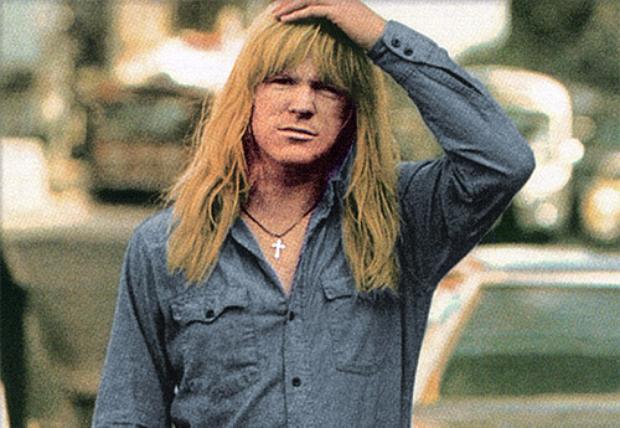
I recently had a meal with a new Christian friend, someone who is older than me and that I respect greatly. The conversation covered religion, politics, war, racism, etc.  What was interesting, is that he assumed that I believed the same as he did.  When he made a disparaging comment about someone's skin color and I let him know I didn't agree with his statement (I'll be writing about the sin of racism later) this song by Larry Norman went thru my head.  

This tremendous song was written by Larry Norman over 40 years ago.   It did not receive a lot of acclaim.  However, this song of protest at the state of American society still rings true in many ways (caveat:  I'm too young to appreciate the intricacies of the Vietnam War, so I don't know if I agree with Norman about his anti-Vietnam stance; nevertheless, I do agree with the rest of his song):

I was born and raised an orphan in a land that once was free
In a land that poured its love out on the moon
and I grew up in the shadows of your silos filled with grain,
but you never helped to fill my empty spoon.

And when I was ten you murdered law with courtroom politics,
And you learned to make a lie sound just like truth;
But I know you better now and I don't fall for all your tricks,
And you've lost the one advantage of my youth.

You kill a black man at midnight just for talking to your daughter,
Then you make his wife your mistress and you leave her without water;
And the sheet you wear upon your face is the sheet your children sleep on,
At every meal you say a prayer; you don't believe but still you keep on.

And your money says in God we trust,
But it's against the law to pray in school;
You say we beat the Russians to the moon,
And I say you starved your children to do it.

You are far across the ocean but the war is not your own,
And while you're winning theirs, you're gonna lose the one at home;
Do you really think the only way to bring about the peace
Is to sacrifice your children and kill all your enemies?

The politicians all make speeches while the news men all take note,
And they exaggerate the issues as they shove them down our throats;
Is it really up to them whether this country sinks or floats?
Well I wonder who would lead us if none of us would vote.

Well my phone is tapped & my lips are chapped from whispering thru the fence,
You know every move I make, or is that just coincidence?
Well you try to make my way of life a little less like jail,
If I promise to make tapes and slides and send them through the mail.

And your money says in God we trust,
But it's against the law to pray in school;
You say we beat the Russians to the moon,
And I say you starved your children to do it.

You say all men are equal, all men are brothers,
Then why are the rich more equal than others?
Don't ask me for the answer, 
I've only got one:

That a man leaves his darkness when he follows the Son

Copied from MetroLyrics.com 


BE HOLY.
BE A MAN.


Picture
The people walking in darkness have seen a great light; on those living in the land of the shadow of death a light has dawned.  

We know what it is like to walk in darkness. We know what it is like to live in the shadow of death. But we also are beginning to experience what it is like to see. The darkness of denial is giving way to the light of honesty in our lives.

Of course, when you have lived in darkness as long as we have, the light can be painfully bright. We see the truth about ourselves and our self destructive behavior. We see the truth about our refusal of love. We see the truth of our brokenness. We see old pain. We see current behaviors that damage ourselves and others. The light dawns. It is not a pretty sight.

But God does not send light into our darkness to shame us. The exposure may trigger our deep shame, but this is not God's purpose. God's light is like the light of dawn. It is a light that signals that something new is happening. A new beginning is possible. The light that God brings into our dark world is a light of hope.

Recovery is God's light coming into our darkness. The light exposes. We begin to see clearly the ways we have sinned and the ways other people have sinned against us. And the light provides hope. In the light we see the possibility for new beginnings.

Lord, your light hurts my eyes.
It is too bright.
I see too clearly now.
It is too painful for me.
Help me to believe that your light is not to bring shame
but to bring hope into my dark world.
Light of Heaven, embrace me with your warmth.
Heal me with your bright rays.
Give me life.
And hope.
Amen.

Copyright Dale and Juanita Ryan
National Association for Christian Recovery