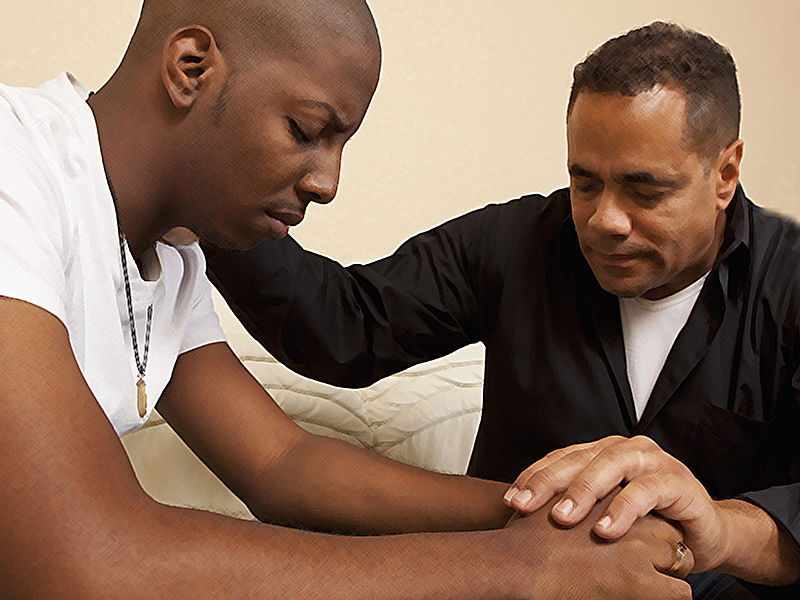
So often, a person only reveals a difficult period of his or her life after the event, while reflecting on the event. This is especially true of "testimonies" given at church. A person stands to thank the Lord for seeing her through a dark period of life; meanwhile, many people stare in wonder how most of the rest of us were unaware of her living through such an event. I, too, used to live a privatized life. If I was struggling through a rough patch in my life, I would keep it all to myself, unwilling to share my pain or difficulties. Part of the reason for my privacy was fear, part of it was shame, and another part was pride. I have decided not to live my life like that any longer. I intend on being transparent about my struggles. I think that in doing so I can honor the Lord, live a more honest and thus healthy life, as well as give comfort to anyone who may be experiencing the exact same feelings.Over the last month or so I have felt loneliness unparalleled -- never have I felt this lonely. This lonely period began when I discovered that the only friend I had (in my area) was not really a friend, in the true sense of the word. Our relationship, unbeknownst to me, has never been one of true friendship but of convenience. If this certain person could not find anyone else to spend time with, then I would do. I was unaware that our so-called friendship was in this sad state of affairs. Now, in other periods of my life, I would have responded differently to this tragic state. But at this vulnerable point in my life, when I most need a close friend (with whom I can spend time and confide and share my thoughts and feelings, as well as reciprocate), I am left all alone and very hurt. The friend I thought I had was not really my friend at all.I often picture loneliness as a chasm because that is how it feels -- like a space of emptiness that needs filling. "But the Lord should fill that chasm," some say. Well, that sounds nice; that sounds like the typical, Christian, spiritual-yet-superficial pat-answer to every situation. But I cannot see the Lord, nor can I audibly hear His voice, or hug or touch or punch and be playful with Him like I would a friend. The Lord gives us like-minded friends who can excite the senses: sight, sound, touch, smell (hopefully pleasant). "Some friends play at friendship but a true friend sticks closer than one's nearest kin" (Prov. 18:24 NRSV). In my present situation, little did I know that I had the former but not the latter. This present loneliness is also coupled with a deep sense of rejection. The one is as hard to bear as the other. What I am learning from this experience is how to choose a friend more wisely in the future. The saying is true: we cannot choose our family members, but we can choose our friends. Nor can we choose if or when loneliness will visit us: all of us, no matter our age or social status, are susceptible to a brief encounter with loneliness (or depression or rejection). Spouses and members of large families often sense loneliness as much as any single person; so the mere presence of people in our lives will not guard us from its grip.Some people, when experiencing loneliness or depression, merely endure it instead of praying or calling someone or watching a movie or going for a walk; they merely sit and endure the grief and pain, the emotional and mental torment. For some, enduring these times is all they can do; they feel paralyzed by their emotions or mental state.I know firsthand that there are many people in the world today, Christian and non-Christian, who are lonely and depressed. I know so because I receive their emails. None of us should deny the fact that at certain times in our lives we must drink the cup of loneliness. We do not like this cup. We try to avoid drinking the contents of this cup. But often we are forced to take this cup, press it to our lips, and drink.I think the aversion we sense to such an experience is natural. We should not feel guilty because we try to avoid feeling lonely or depressed. However, Henri Nouwen has some sound advice:Whenever you feel lonely, you must try to find the source of this feeling. You are inclined either to run away from your loneliness or to dwell in it. When you run away from it, your loneliness does not really diminish; you simply force it out of your mind temporarily. When you start dwelling in it, your feelings only become stronger, and you slip into depression. The spiritual task is not to escape your loneliness, not to let yourself drown in it, but to find its source.1Why finding the source of your loneliness is so very important, he admits, is because "it leads you to discern something good about yourself."2 For me, that goodness is grounded in the fact that I consider myself worthy of friendship, with much to offer a friend. I despise this loneliness because it reminds me that I actually have been rejected, and it hurts. During Jesus' darkest hours in the garden at Gethsemane (lit. "the place of pressing"), He confessed to being deeply grieved, to the point of death, praying, "My Father, if it is possible, let this cup pass from me" (Matt. 26:39). Do we not pray the same prayer when we are facing some of the darkest hours of our lives? We all want our respective cups to pass from us. This cup of loneliness is mine to drink for now. No one else can drink from this particular cup. I must drink it, and I must drink it alone. A time will come when the contents of this cup will be depleted. I can then wash the cup, dry it, and place it back into the cupboard. I look forward to that day. 1 Henri J.M. Nouwen, The Inner Voice of Love: A Journey Through Anguish to Freedom (New York: Image Books, 1998), 36. 2 Ibid. This truly honest post was written by William Watson Birch. You can find the original post with comments here: http://www.classicalarminian.com/2013/01/the-cup-of-loneliness.htmlBE HOLY.BE A MAN.
There is an important principle in handling temptation. Did you know that many times, you can anticipate temptation?
Look at the picture of this mountain path and I will try and describe this principle to you. Imagine yourself at the bottom of this mountain and you want to reach the top. The path circles around the mountain, rather circuitously and over time, you get to where you know this mountain fairly well. You know that when you get to the east side of the mountain, the drop is shear and the side is craggy and the path is treacherous. Fortunately, for you, the path has rails (like in the picture) that help you stay steady. On the north face of the mountain, the wind is very brisk, you almost feel like you will be blown off the path. On the west side, the path is lush and covered with trees that shield you from the rain and sun. On the south side, it is stark and barren and the sun or the rain beats down upon you miserably.
You know pretty much what's coming ahead because you have been there before. So you continue on your journey in anticipation. You know that you need support when you come to the slippery east side. You know that you need to grab trees and use your walking cane on the windy north side. You know that you can take it easy and enjoy yourself on the west side. You know that you need to apply protection to prevent sunburn on the south side.
Usually, as you traverse up a mountain, it takes less time to go around it because it is usually smaller the further up you go. Just like temptation, the more you prepare for it and the more times you say no to temptation, the easier the path.
Do you have the picture? Do you get what I am saying?
Think of this path as your life. You can pretty much predict what will happen if you go certain places. If you have to go someplace treacherous, get some support. Take someone with you, be accountable when you go there. If you find yourself in a place that can blow you off your feet, look for trees and walking canes that you can grab onto. If you are in the heat and need to apply SONSCREEN, ask God for His protection.
This is the principle to handling temptation: Anticipate, think, plan, pray. Use your brain. Trust the Holy Spirit's guidance.
You can't use the excuse, "I just couldn't help myself, after all I'm only human." God gave you a brain, you're not stupid. You're not an animal that just reacts. You can think and plan ahead...
BE HOLY. BE A MAN.
My thanks to Tom Eisenman for this concept.
If you stumble into sin, believer, don't give up; don't allow hopelessness to consume you, the deceitfulness of sin to blind you, or the weight of shame to defeat you. In the morning and evening prayer we pray, in part, the following: "I have set the Lord always before me; because he is at my right hand, I shall not fall" ( Ps. 16:8). Christ is at your right hand, and this fall shall not be final for you; He took the final fall. Yes, you may feel as though your worst day has cast a shadow over you that will never break to show the light of day, but, happily, you're wrong. God, in Christ, has declared you to be righteous ( 2 Cor. 5:21). Of the righteous we read: "for though they fall seven times, they will rise again" ( Prov. 24:16NRSV). You will rise, friend, because Christ will lift you up. He took the ultimate fall in order that you should rise. No one knows how many times I've had to encourage myself, thinking these thoughts, repeating the words of this post to myself. How I didn't play dead but arose from sin is a testimony to God's sheer grace. This post is as much an exhortation to myself as it is for anyone else experiencing difficulties or tragedies, whether self-caused or otherwise. What do you do on the worst day of your life? Rise: not because you're inherently worthy of being named righteous. Rise because the one who took the ultimate fall declares you righteous. Rise because, though you sinned, though you deserve the fate of the wicked like the rest of us, there is therefore now no condemnation for those who are in Christ Jesus ( Rom. 8:1). But rise, too, because you neither honor the Lord nor serve the body of Christ by remaining fallen. Don't play dead, possum. In Christ you have been made alive ( Col. 2:13). Play dead to your old, sinful nature or past. But in Christ, even when you sin, don't play dead -- don't remain defeated. In Him you are more than one who has conquered all spiritually negative realities ( Rom. 8:37). "So if you have been raised with Christ, seek the things that are above, where Christ is, seated at the right hand of God" ( Col. 3:1 NRSV). You can avoid re-offending others by rising, and thinking healthy, spiritual thoughts: "whatever is true, whatever is honorable, whatever is just, whatever is pure, whatever is pleasing, whatever is commendable, if there is any excellence and if there is anything worthy of praise, think about these things" ( Phil. 4:8). All offenses begin with thoughts. We are instructed to destroy arguments raised up against the knowledge of God. But the apostle Paul also added, "We destroy arguments and every proud obstacle raised up against the knowledge of God" ( 2 Cor. 10:5 NRSV, emphasis added). How many thoughts rise up against the reality of God's holy existence and righteous standards? We are taught to destroy such thoughts, to take them captive and make them obedient to Christ ( 2 Cor. 10:5). I picture such thoughts as personified. I imagine capturing them, putting them into a prison cell, while Christ stands watch over them as Guard. If I fail to do so, then I may entertain such thoughts, have them affect me emotionally, and then obey them. When I obey them, I sin. "But one is tempted by one's own desire, being lured and enticed by it; then, when that desire has conceived, it gives birth to sin, and that sin, when it is fully grown, gives birth to death. Do not be deceived, my beloved" ( James 1:15-16 NRSV). But when you sin, no matter the degree, take it immediately to Christ. "If we confess our sins, he who is faithful and just will forgive us our sins and cleanse us from all unrighteousness" ( 1 John 1:9 NRSV). Don't let sin drag you into a hopeless, despondent, dejected place, out of which you feel impossible to escape. By His grace and forgiveness you rise up, and you keep rising up. You don't rise up only once. You will need to rise up every time you fall. More than that, you will need to rise up every time you think about a past fall. Such thoughts about your past have a tendency to paralyze you emotionally, mentally, and spiritually. Paralyzed, you will play dead. No: in Christ you must rise up from the guilt of your past. Though you fall seven times a day, you will rise -- you must rise ( Prov. 24:16). The Lord foreknew every sin you would ever commit when He by grace through faith in Christ saved your soul. You don't ever take Him by surprise by any thought, desire, or action. In Christ He has already declared you holy, sanctified (set apart from the world and for His service and care), and righteous. You don't let Him down because you don't hold Him up. You are becoming more and more like Christ ( Rom. 8:29), slow as such may seem, and your heavenly Father understands completely all of your eccentricities, particularities, and unique qualities. This is how, you see, you keep on rising. Give your defeats to the One who defeated sin, death, and hell ( 1 Cor. 15:56-57; 1 John 3:8). Give your hopelessness to the God of hope ( Rom. 15:13). Whatever you do, don't play dead, possum, but rise. This post was written by William Watson Birch. You can find the original post with comments here: http://www.classicalarminian.com/2013/01/saturday-devotion-dont-play-dead.htmlBE HOLY.BE A MAN.
God has given us instructions in His Word that prayer is something that every Christian needs to be doing. Prayer is, simply put, the way we come to know God personally. Earnest, honest prayer that is filled with praise, confession, thankfulness, and requests is what God desires. Prayer also needs to be filled with times of solitude, to be free from distractions, so one can hear from God. 1) Is there ever a time we should not pray? We had a couple of American friends visit us while we were living in Germany and we were out to eat, enjoying the local flammkuchen at a little eatery. My friend ordered water because he didn't want to spend the money on soda and as the waitress opened the bottle and was about to pour, she told him that the bottle was going to be 6 Euro. My friend, who didn't understand European customs, didn't remember that we had told him that water is not free in European restaurants. He became upset and the waitress withdrew his order of water. Instead she offered soda which was only 2 Euro. He agreed to that. However, you could tell that the waitress was visibly upset. We apologized to her as best we could. When she brought the flammkuchen to the table, we were about to pray aloud when I said, "I don't think we should pray. I'm afraid that it would give this waitress a bad impression of Christians." Now don't get me wrong I think it IS appropriate to pray in public but God reminds us that prayer can become sin. In this instance we all agreed that praying publicly wasn't God-honoring in this situation. 2) Is there ever a time we should not pray? I had a friend one time who had a severe debt and asked God to pay the debt for him. He told everyone the exact amount and prayed fervently (personally, I don't think it's wise to publicly state an exact amount of money). Within a week, God miraculously provided that money and more. The person again broadcast the exact amount that God provided. The reactions were predictable. "Wow!" "Prayer works." "God is so good." "Praise the Lord!" and so forth... I wonder what his friends who have been praying that God would work a miracle in their lives thought when God did not seemingly answer their prayers. Maybe they were encouraged. Maybe it lifted their faith. Maybe it caused them to pray more. or Maybe it discouraged them. Maybe they were like, "Why does he always get the breaks? Why did God answer his prayers and not mine?" Maybe they told themselves, "I guess I have to pray harder." I wonder what the reaction would have been if God had not provided the amount or the amount with extra to spare. "Is God still good?" "Does prayer still work?" 3) Finally, I believe that God can heal people. God may choose to heal miraculously or he may heal slowly or he may heal at the hands of doctors. Healing is a biblical concept.My friend had fallen on an icy patch and went to see his physician who told him it would be 6-8 weeks before he would be pain free. He was having severe pain and muscle spasms. He believed he was going to lose his job because he could hardly move. As he told me, just two days later, you can tell his pain was real. He was almost in tears as he was describing what he was going thru. When he was talking, I heard clearly in my mind, "You need to pray for him." So when he finished I grabbed a couple more guys and we prayed for him on the spot. I walked away thinking, "OK I did what God told me to do. I was obedient. But nothing's gonna happen." The next morning, I felt prompted to pray for him again and I did during my devotions. Later that day, I texted him. Here's the convo: Me: How did it go today? Him: Pain free and awesome, thanks for asking :-) Me: You're kidding! No pain? The MD said 6-8 weeks. Him: No pain, no spasms, no discomfort, no kidding! Me: Wow! So work was good? Him: It was great! I was floored. I told Karyn about his healing and I said, "this is scary. God answered our prayers for his healing." Karyn said, "why is that scary?" I said, "because I obeyed and God healed. What else does that mean God wants to do?" Later that week, I talked to my friend in person. He said when he woke up the next day (the day after we prayed together) he got ready for work and had forgotten all about his pain until I texted him. He said that it was then that he realized that God had healed him. When I heard of his healing, I had mixed emotions: - I had doubt. "Did God really do that?" - I had some fear. "What else will happen if I pray? Will God do it again?" but also- I became more encouraged to pray right away with people in need. - I had my faith lifted.There may be people who heard of my friend's healing who may have also asked themselves, "Why won't God heal me? I have asked God numerous times and nothing has changed." Maybe his healing caused them to feel discouraged. Yet... Who knows the mind of God? Who can understand the ways He works? Who can bring an accusation before God?These are all definitively unanswerable in my mind. Still, I will pray. I continue to attempt to understand, trust and believe. I try to rejoice with those who have their prayers answered. I mourn with those who don't seemingly have their prayers answered. Yet, even in my imperfection and weakness, I point to God. What we see can't be all there is... BE HOLY.BE A MAN.
I will remember the deeds of the Lord; yes, I will remember your miracles of long ago. I will meditate on all your works and consider all your mighty deeds.Sometimes hope fails us because of the pain of present circumstances. The intensity of the daily struggle can overwhelm us and crowd out hope for the future. We find ourselves unable to focus on a hope-full future because we cannot see beyond the burdens of the present. But we need hope in order to continue the journey. Without it we cannot go on. Without hope there is only the despair that comes when we think nothing will ever change. Reviewing our experiences of God's help in the past is one way of nurturing hope. When present events crowd out hope, leaving despair and fear, we can turn to the disciplines of remembering. It can sustain our faith and renew our determination to continue the journey. Remembering is not an easy discipline for us. Our memory is not good. Even miracles seem to age quickly - they become 'miracles of long ago'. Things that seemed unimaginably wonderful at the time can quickly fade in our memory as present concerns demand our attention. Dramatic breakthroughs in recovery that seemed to be powerful signs of God's grace and presence may seem painfully ordinary after a few months. For this reason it may be necessary to find someone to help us with the discipline of remembering. Hope can often be renewed by asking a trusted friend to remind us where we have been. An objective review of the journey to this point helps us see God's sustaining grace in our lives. And that gives us the hope to go on. Lord, help me to remember the specific ways you have sustained me in the past. Help me to remember how I have changed. Help me to remember your love and grace so that I can grow in my capacity for hope today.Amen.Copyright Dale and Juanita Ryan National Association for Christian Recovery

Missionally, churches exist to be a beacon of hope and a safe place for the community. One could look at the church as a spiritual hospital. Those who have wounds can come and their wounds can be bound. What happens, however, when the wounds a person carries was created by a church? I have heard stories of people who flee from churches because of the treatment they received because of their divorce, lifestyle, past, or even because the perception of being “money hungry”. Let’s face it, churches ask for money regularly. For some, it is a concept that is second nature. Whether it is a bonus check at work, an inheritance, regular pay check, or any other source of income many people choose to give a portion of that money to the church. Others are not used to this idea and are even offended to think that this could possibly be an obligation. In my other job as an office administrator for a church, I receive 10-15 calls a day asking for money for those who are behind on bills. I also receive the same number of calls from telemarketers wanting to sell me a new service or product that will enhance my life. As a Lead Pastor, I am also approached by people needing help…which I am glad to take part in. In today’s culture the average Christian gives a little over 2 percent of their income to God’s kingdom (church or other charities). What’s my point? If the Old Testament legalism says 10 percent, then aren’t we glad that the New Testament was written to get us off the hook? Wait a minute though…if what we learned yesterday is true, and Jesus gives his followers a different standard (care for the widow, orphan etc) then this would mean a different level of responsibility, right? Do you think Christ would say “still continue to trust in God, but not nearly as much as you used to…”? The church may talk about money a lot…but so does every department store, infomercial, telemarketer, car salesman, shopping mall and magazine ad you come in contact with. Mission shouldn’t need a commercial. Give extravagantly. My next post will talk about what I eluded to earlier…a new standard for the way a church should welcome people…people with wounds and imperfections. The posts this week are written by our pastor in honor of Pastor Appreciation Month. For the original post, go to: http://other-words.net/2012/10/16/a-new-standard-pt-2/
“Walk in the Spirit.” In the original language, Paul’s phrase literally means, “walk as you have been walking in the Spirit.” How had the Galatians been walking in the Spirit? In Galatians 5:5 he says, “For through the Spirit, by faith, we ourselves eagerly wait for the hope of righteousness.” Keeping in step with the Spirit, therefore, first has something to do with hope. During anti-porn week, we identified from secular research what viewing porn does to a person. This week presents practical advice of how to stay away from the influence of porn. The gospel Paul declared is a message of anticipation and expectation, what Paul calls the “hope of righteousness.” Our great hope is that one day Christ will judge the world (Acts 17:31). He will destroy sin and death forever. He will recreate the world, and we will be just like Him (1 Cor. 15:51-55). This is our astounding hope. For Paul, faith in the gospel does not merely mean we assent to these grand promises but that we give ourselves wholly to them: we center our lives on them. Far from being a passive thing, faith is active. It engages the mind and the heart. As the author of Hebrews says, faith is the assurance and essence of things hoped for (Heb. 11:1): it is the delightful conviction that the things we hope for are real. Walking in the Spirit means we stir up this hope in us, or as Paul says, we “eagerly wait” for it (Gal. 5:5). We all have hope, but it is not a perfect hope. We all suffer from the distractions of the world and sin. It is for this reason the apostle Peter urges us: “set your hope fully on the grace that will be brought to you at the revelation of Jesus Christ” (1 Pet. 1:13, italics added). Practically speaking, this means just as we have fed our minds on pornography, we should now feed our minds on eternity. Just as we have spent hours engrossed in sexual media, we should spend time filling our imaginations with the eternal promises of God. We must, as Paul says, set our minds on the things of the Spirit (Rom. 8:5), on the glories of our inheritance as God’s children (v.17). It is amazing how this renewed hope combats the mind-warping impact of pornography. When our imaginations are filled with anticipation of the coming kingdom of God, we become more and more determined to taste this future hope in the here and now. The apostle John reminds us that though we are now children of God, “what we will be has not yet appeared,” but we know when Christ appears we will be like him, because we shall see Him face to face (1 John 3:2). He follows this glorious promise with the practical application: “Everyone who thus hopes in him purifies himself as he is pure” (1 John 3:3). Knowing we are destined for an eternity of breathtaking purity and holiness, we purify ourselves here and now because we want to have a taste of this future hope. As intense as pornography is, it cannot compare to the life-sustaining hope we have in Christ. Far from shutting down our desires in what we never dreamed of, C.S. Lewis reminds us: " Indeed, if we consider the unblushing promises of reward and the staggering nature of the rewards promised in the Gospels, it would seem that Our Lord finds our desires not too strong, but too weak. We are half-hearted creatures, fooling about with drink and sex and ambition when infinite joy is offered us, like an ignorant child who wants to go on making mud pies in a slum because he cannot imagine what is meant by the offer of a holiday at the sea. We are far too easily pleased....Do you think I am trying to weave a spell? Perhaps I am; but remember your fairy tales. Spells are used for breaking enchantments as well as for inducing them. And you and I have need of the strongest spell that can be found to wake us from the evil enchantment of worldliness." Tomorrow, we talk about the power of God's Word.This post is taken from the booklet, YOUR BRAIN ON PORN by Luke Gilkerson. The booklet can be found at: http://www.covenanteyes.com/brain-ebook/BE HOLY.BE A MAN.
(Continued from yesterday)As the sons of these two men grew up, they each went their respective ways, moving to various parts of the country. The difference was, the pastor's sons wanted to return to see their father. The sons, all leaders in their own right in different parts of the country, enjoyed their father's advice, steadiness, humble strength and faith in God. The cattleman's sons did not want to see their father. In fact, they did their best to avoid him. Unfortunately, when they would visit their father, it wasn't uncommon for the cattleman and his sons to physically as well as verbally fight each other. They would argue over cattle, land, money, food. The cattleman's sons also had trouble in staying married to their first wives. They and their children experienced the pain of separation, divorce, remarriage, anger, suspicion and the like. So, now, we are getting to the end of our story. What happened to these two men? These men chose different paths for themselves and their family experienced the consequences of these men's choices. The cattleman died. He didn't experience a long illness. Just one day, he was no longer part of this earth. The world woke up one morning and he did not. The land and the cattle that he once owned were divided and sold. His sons avoided each other. The sensuality that the cattleman pursued, led to disjointed, isolated, marginally spiritual offspring. His children rarely got together. When they did, peace did not rule their relationships.The pastor lived a long life. He outlived the cattleman by a good 20 years. His children stayed faithful to their spouses. Interestingly, the years after the cattleman died became very rich for the pastor. God's blessings increased exponentially. God increased his faithfulness with abundance. The pastor enjoyed his children, his grandchildren and quite a few great-grandchildren. The pastor had made several, quiet, steady investments over the years and he found that he was experiencing the most financial success he had ever had. He needed nothing. God gave him all he needed and more. More importantly, the pastor enjoyed the spiritual success of his progeny. Several of them followed in his footsteps and went into full-time ministry. The other children became integral parts of their respective churches, supporting God's work both inside and outside the church. All became leaders in their community/profession. The pastor was able to see his heritage for several generations. God blessed him with the opportunity to see that his steadiness, and his pursuit of "God first" paid off with eternal rewards. You see not only did this pastor and his progeny do well, but many of the people who were affected by his ministry over the years were blessed by this pastor's steadiness and quiet confidence in God's ability to care for his children. However, just when it seems like a story is over, God does something amazing. Just when you think you have God all figured out, He moves. Tomorrow we will discuss Esau Redeemed.BE HOLY.BE A MAN.
We are seeing reports on the news for the past several weeks about the weather. If you live in the Midwest especially, the concept of rain is something you remember reading about in a textbook. At this point, many of us are longing for a catastrophic flood as described in the story of Noah. Lawns are drying out, swimming holes are being closed, and kids are staying inside due to the heat. It has been a very dry summer to say the least. If we were to evaluate the spiritual condition of many Christians, summer seems to affect our souls in a similar way. The sun makes us somewhat lethargic and we feel as if God is temporarily on vacation. The dryness we see reflected in our local climate is mirrored within our hearts. It can be a discouraging time. Passion seems to be a memory. In the 37th chapter of Ezekiel, a beautiful story is told about an intimate conversation between God and Ezekiel. Ezekiel was experiencing intense discouragement because of his lack of resources and feelings of inadequacy (in a nutshell). God, however, used this time as a teaching moment for all who may feel the same way. In this story, God uses a valley of dry bones as an illustration about how only HE has the power to animate that which is lifeless. At the end of this depiction we see an energetic army ready to their next command….Every soldier brought up from dry bones. Imagine experiencing each tendon coming together, and each patch of flesh connecting….The awesome power would have been overwhelming. In the times of our intense dryness, we must remember that God has the power to give us life and passion once again. We must also remember that God can use these dry times as teachable moments for not only us, but others we share our testimony with. I challenge you to find a way to reflect on God’s work during these times so that the process can be recorded. Later you will read the narrative as the story of God’s faithfulness and a reminder of His power. The God that can create from nothing can bring you out of the dryness you are in. Trust Him.This is reprint of a post by Rev. Landon DeCrastos. You can find the original post with comments here: http://otherwordsdotnet.wordpress.com/2012/07/17/dry/BE HOLY.BE A MAN.
I will heal their waywardness and love them freely.Waywardness is a turning away from what is in our best interest and following depraved, capricious inclinations. There are many ways in which waywardness can be expressed. Some of us are openly rebellious. We flaunt our wild behavior and laugh at God. Others of us are quietly wayward. We try to appear compliant and good but we are self-reliant and defiantly independent. No matter how we express our waywardness it is a destructive force in our lives. In our attempts to protect ourselves from any further pain we turn away from God and from others who love us. We shut them out. And we shut out their love. As a result, we close ourselves off from what we want and need most desperately in life - to be known and loved. God promises to heal our waywardness. God understands that our turning away is the result of some deep wound in us. God sees this. God knows. God promises to heal us by loving us freely. When we close the doors of our heart, God does not stop loving us. Instead God continues to love us generously and completely. God will love us freely until our fears are gone and our defenses can come down. God will love us freely so that one day we will be able to give up our waywardness and allow ourselves the joy of being loved. Heal my waywardness, Lord. When I turn away from you, love me so that I will return to you again. Amen. Copyright Dale and Juanita Ryan National Association for Christian Recovery

|