One day, through the primeval wood, A calf walked home, as good calves should; But made a trail all bent askew, A crooked trail, as all calves do.
Since then three hundred years have fled, And, I infer, the calf is dead. But still he left behind his trail, And thereby hangs my moral tale.
The trail was taken up next day By a lone dog that passed that way; And then a wise bellwether sheep Pursued the trail o’er vale and steep, And drew the flock behind him, too, As good bellwethers always do.
And from that day, o’er hill and glade, Through those old woods a path was made, And many men wound in and out, And dodged and turned and bent about, And uttered words of righteous wrath Because ’twas such a crooked path; But still they followed — do not laugh -- The first migrations of that calf, And through this winding wood-way stalked Because he wobbled when he walked.
This forest path became a lane, That bent, and turned, and turned again. This crooked lane became a road, Where many a poor horse with his load Toiled on beneath the burning sun, And traveled some three miles in one. And thus a century and a half They trod the footsteps of that calf.
The years passed on in swiftness fleet. The road became a village street, And this, before men were aware, A city’s crowded thoroughfare, And soon the central street was this Of a renowned metropolis; And men two centuries and a half Trod in the footsteps of that calf.
Each day a hundred thousand rout Followed that zigzag calf about, And o’er his crooked journey went The traffic of a continent. A hundred thousand men were led By one calf near three centuries dead. They follow still his crooked way, And lose one hundred years a day, For thus such reverence is lent To well-established precedent.
A moral lesson this might teach Were I ordained and called to preach; For men are prone to go it blind Along the calf-paths of the mind, And work away from sun to sun To do what other men have done. They follow in the beaten track, And out and in, and forth and back, And still their devious course pursue, To keep the path that others do.
They keep the path a sacred groove, Along which all their lives they move; But how the wise old wood-gods laugh, Who saw the first primeval calf! Ah, many things this tale might teach -- But I am not ordained to preach. Sam Walter Foss (1858-1911)
First I want to apologize for talking about my son a lot in this blog. If you are reading this and making the inevitable conclusion that this post is about my son as well….you are right. Just humor me…stick with it….it will be over soon. Also, in a related matter…my son rules.
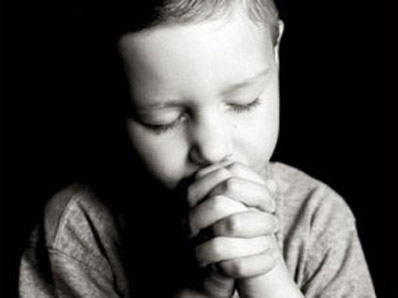
For a few weeks now, we have introduced our son to the concept of prayer sticks. These sticks have the names of various friends, and family written on them. Each night, Josiah will pull a stick out of the jar, and after his story, that is the stick we pray for. We have been praying with him since he was an infant, but he would mostly just listen or look at mommy and daddy shutting their eyes and make funny noises while we prayed.
When he first began to talk, he would say “Amen” when he knew the prayer was over. Several months ago, he asked us if he could pray. Often it would be him bashfully mumbling and we couldn’t understand a word. Within the last week, our son has asked to pray and his prayers have been coherent and actually very profound. I won’t go into the content of the prayers but it seems that God shows up when he prays. Lately, at the end, my wife and I will look at each other with amazement and wonder where he got the idea to pray for these specific areas of need.
Don’t take this as a statement of theological fact, but I almost wonder if God hears these prayers a little louder than most prayers that I pray. Not because God loves anyone more or less, but when prayers are prayed with innocence and sincerity at this level, one can feel an angel walk by.
My point? Teach your kids to pray. Prayer is a powerful weapon when yielded by someone as skilled as a child. Let them loose on the landscape of divine communication and just watch what happens.
Apparently with prayer sticks…..prayer sticksThis post was written by Rev DeCrastos. For the original post, go to: http://other-words.net/2013/04/17/prayer-sticks/For discipleship resources for your children, go to: http://www.ironstrikes.com/for-dads.html and http://store.seedbed.com/products/echo
A political science professor at Butler University asks students to disregard their “American-ness, maleness, whiteness, heterosexuality, middle-class status” when writing and speaking in the classroom – a practice the school’s arts and sciences dean defended as a way to negate students’ inherent prejudices. The syllabus of the course at Butler, a small Midwestern liberal arts institution in Indianapolis, spells out that students should use “inclusive language” because it’s “a fundamental issue of social justice.” “Language that is truly inclusive affirms sexuality, racial and ethnic backgrounds, stages of maturity, and degrees of limiting conditions,” the syllabus states, referencing a definition created by the United Church of Christ. The syllabus of the class, called Political Science 201: Research and Analysis, goes on to ask students “to write and speak in a way that does not assume American-ness, maleness, whiteness, heterosexuality, middle-class status, etc. to be the norm.” It is taught by a black, female professor. In an interview with The College Fix, Jay Howard, dean of Butler’s College of Liberal Arts and Sciences, denied this practice essentially presumes every student who walks through the door is a racist or misogynist. He said students must be told not to assume such prejudices because such assumptions are ingrained into the culture and remain there until questioned. With that, a liberal arts education questions these assumptions, and such questions can make for uncomfortable situations, he said. “Sometimes in order to broaden the conversation and broaden the understandings you’ve got to risk making people uncomfortable,” Howard said. “There’s nothing about a college education that guarantees you won’t be made uncomfortable. As a matter of fact, if you’re never made uncomfortable in your college education, you’re not really getting a college education.” Howard said the college he oversees does not want students to continue to harbor such assumptions without question, “but neither do we want to exclude the dominant group in society in our attempts to make sure that we’re leveling hierarchies.” In twenty years, white people will no longer be the majority, but they will still be the largest ethnic group, Howard said. He said using inclusive language would help students prepare for a changing world as America becomes more diverse. He added that American culture makes speaking inclusively difficult, and the English language is partly to blame. “Our language doesn’t make it easy to write in ways that are inclusive,” Howard said. “We don’t have a generic singular, I mean we have he and she. There is no pronoun that is gender-neutral there.” However, not all writing- and language-intensive classes at Butler University mandate students use such “inclusive” language. Nancy Whitmore, director of the journalism school in the College of Communication, said in an interview with The College Fix that students in her department are encouraged to use diverse sources with a wide variety of opinions, but are not mandated to use so-called inclusive language. Whitmore said she is unsure what educators in Butler’s College of Liberal Arts and Sciences mean when they ask students to write without assuming certain things to be the norm. “I don’t think I could ever write from a black woman’s point of view because I’ve never been a black woman,” Whitmore said. Indeed. My name is Ryan Lovelace, and I dropped that politically correct political science class. Clearly, the College of Liberal Arts and Sciences at Butler University believes its students were raised as racist and misogynist homophobes who have grown to harbor many prejudices, a stance that is both offensive and hostile to any student’s ability to learn. As a student at an institution predominantly focused on the liberal arts, I expected to hear professors express opinions different from my own. I did not expect to be judged before I ever walked through the door, and did not think I would be forced to agree with my teachers’ worldviews or suffer the consequences. Being judged and forced to act a certain way is antithetical to how any institution of higher education should conduct itself. As a journalism major, I will now strive to avoid the liberal arts college as much as possible, not because the college fails to provide its students with any practical knowledge, but because the college seeks to indoctrinate its students with a hostile paradigm that views people like me—an American, white, heterosexual male from a middle-class background—as evil; whitey-righty need not attend. Many consider higher education to be in turbulent waters because of rising tuition costs and student loan debt, but students who actually graduate may struggle even more if they view the world as Butler’s College of Liberal Arts and Sciences does. The liberal arts college seeks to include people, but someone will always be excluded, as it is impossible to always include everyone. Furthermore, I’m not sure how to write assuming any other persona but my own. Any attempts to do so would only be offensive to people different from myself. Lastly, the idea that people have different views from mine is not what makes me uncomfortable. The idea that I must walk, talk and act as the liberal arts college pleases does. I’ll speak as I always have and conduct myself in the way I deem fit. I think paying $40,000 a year should give me that basic right. This post was written by Butler University student Ryan Lovelace. You can find this post at: http://www.thecollegefix.com/post/12062BE HOLY.BE A MAN.
The Son of Man came eating and drinking, and you say, 'Here is a glutton and a drunkard, a friend of tax collectors and "sinners."'One of the accusations made by the religious leaders of Jesus' day was that He partied with undesirables. It was unacceptable in their minds to associate in any way with undesirables. That would make you 'unclean'. But it was particularly unacceptable to party with undesirables. Then, as now, religion was thought to be very serious business, much too serious for the kind of celebrations that Jesus enjoyed. Religion was supposed to be about intellectual abstractions and theological detail - not about going to dinner parties with unsavory characters. In His teachings Jesus draws extensively on the Old Testament themes of the Sabbath, the Jubilee and the messianic feast to make a point. Jesus told many stories about God's love for celebration. When the lost is found, the finder throws a feast. When the prodigal returns, the father has a party. When a single person repents, the angels rejoice. And on and on. Jesus, the man of sorrows, was also a man of celebration and joy. Like the religious leaders of Jesus' day, we may sometimes find ourselves resistant to joy. We may resist joy because we fear disappointment. Or we may resist joy because it doesn't seen congruent with being a serious minded person of faith. We may resist joy because we have been shamed or even punished for being overly enthusiastic as a child. It is a risk to make room for joy in our lives. Joy requires that we be open to the possibility of experiencing conflicting emotions. If we wait to experience joy until our anger, grief and self-condemnation are completely gone, then we will wait a long time. But it is possible to experience joy without denying or avoiding other more painful emotions. We can follow Jesus' example of joy today. When joy comes, we can receive it. It is a good gift from God. Lord of joy, Lord of celebration, Open my heart to the possibility of joy today. Help me to tolerate the confusion that comes when sorrow and joy live side by side in my heart. Give me the courage to joyfully celebrate life. Amen. Copyright Dale and Juanita Ryan National Association for Christian Recovery
Musicians rarely use the “F” word if they want to receive radio play. The group Insane Clown Posse, when they wrote the song, “F--- the World” knew that it would never achieve popular status, using the “F” word 93 times in that song alone. Of course, the members of ICP don’t claim to be Christians. The first popular Christian musician who used the “F” word was Bono from U2 with his statement on national TV that the stage at the Golden Globe Awards was “f---ing brilliant.” His statement raised a firestorm of controversy. Because his statement was on live American TV, the FCC was involved and ruled that Bono did not violate FCC standards. They concluded that the wording “f---ing” was used as an adjective not a verb, making it in the same classification as “bloody” which is commonly used on British TV. Next, there is Brian “Head” Welch who recently left Korn and started his own band because of his conversion to Christianity. His song, Flush, has a very controversial video attached to it. The video has lesbian behavior, scantily clad women and drug use in it. The song makes no mention of Christ, just a dark, nihilistic portrayal of a sinful lifestyle. The last line, “come on, get up, let’s change” is a reference to the life changing behavior that can occur when one opens his/her life up to the saving power of Christ. I read Head’s autobiography and am impressed with his undying allegiance to our Savior and his commitment to reach an audience that would not normally listen to Christian music. He’s dying to bring his Korn fans to Christ. Arguably, that’s where P.O.D. is coming from on this new album, Murdered Love. P.O.D. has a large Christian fan base but has always had a wider appeal to the secular world since the albums Southtown and Satellite. There have been rumors that P.O.D. has given up their Christian beliefs. Many believe that P.O.D. will alienate their Christian audience. There have been statements that a Christian should never use the “F” word. The Christian world, from my observation, has not been terribly charitable to P.O.D. Nevertheless, P.O.D. keeps cranking out terrific music. This new album, Murdered Love, is no exception. The title track, of Jesus’ crucifixion, is an absolute masterpiece and representative of P.O.D.’s finest. However, my favorite track, “I Am” is just mind-blowing. This is the song that has gotten P.O.D. into some hot water. This is the track that uses the “F” word. My heart breaks when I hear this song and it has nothing to do with the fact that P.O.D. uses the “F” word. This song is meaningful to me because it is clear that P.O.D. understands the hurting sinfulness of our world. Some people are saying that P.O.D. is just trying to reach a wider audience. However, I believe that he is trying to shock his Christian audience out of their white, sanitized Christian bubble. This song is written from the perspective of a person who has been horribly used, abused, and beaten down. Here is a lyrical sample: I am the murderer, the pervert, sick to the core, I am the unclean dope fiend, I am the whore I am the forgotten child, ravaged and raped and sex trafficked Since I'm a little strange Daddy called me a faggot
Are you the One that's come to set me free? Cuz if you knew who I am would You really want to die for me? They say you are the cursed man, the One who hangs from this tree But I know if this is the One and Only Son of God, so tell me who the F--- is He? Don’t let the “F” word distract you. This is the way that the used and abused of the world feel . “I’m not worthy of anybody loving. Plus, I live in hell and this God that you talk about doesn’t help me. So, F--- this God!” Their anger is unmistakable. These are the people that we see every day, but walking around in our little Christian bubbles we refuse to interact with them. They are the broken, dejected, dirty, the dregs of society. They are the drunken, drugged, prostituted, sexually confused, homeless people that we tend to avoid. How dare I get my hands dirty by interacting with them?! Our sanitized, white, perfect Christian world needs to be awakened. The world is going to hell around us. They are mad at the way we ignore them and they blame God because of our insensitivity and our hangups on the "proper" way that Christians are to talk and act. With the song "I Am", I believe that P.O.D. is saying that God will hold us responsible for how we portray His impeccable character to a hurting world. I am so glad for bands like P.O.D. who rock our world (in more ways than one) and help us to see that there is a dying world out there and we need to be making a difference. People need to see that God cares, God loves and they are worthy of someone dying to save them. Jesus died to save the world. Are you dying to share Jesus with this dying world? Tomorrow, you will see another perspective on swearing from my friend, The Seeking Disciple.BE HOLY.BE A MAN.
That same night the Lord said to him, “Take the second bull from your father’s herd, the one seven years old. Tear down your father’s altar to Baal and cut down the Asherah pole beside it. Then build a proper kind of altar to the Lord your God on the top of this height. Using the wood of the Asherah pole that you cut down, offer the second bull as a burnt offering. ”God had called Gideon to serve Him. In fact, God greeted Gideon with the moniker, "mighty warrior." What a greeting! How would you like God to say that to you to get your attention? As part of his call, though, God told Gideon to do something very brave. He had to get rid of his father's idols. I was reminded of this recently, on a visit with my father. We stopped at a gas station to fill up the gas tank of his truck and when we were driving away, he was writing down the cost of the gas and the mileage of the truck. My dad has done that ever since I could remember. If he paid by cash, debit or credit card, he always wrote that down. My dad was raised in the depression era so he learned from his father about the need to count every penny. As he was writing, I recalled my first car. I got a little notepad (just like my dad's) and wrote down my gas usage and miles. I did that for probably my first two cars. When I got my third car, I thought to myself, "why are you doing that for?" I recalled that I had simply been following my father's example. Now, I don't have the financial acumen that my father has nor do I have the same interests in knowing about mileage and gas usage (although, I don't blame my father at all for this behavior, it is a good discipline). Gideon, however, had a different kind of father. His father had a half-hearted desire to please God. Sure, his father worshiped God but he had also built an altar to another god. God told Gideon that if he was going to really be the Mighty Warrior that God intended, then he would have to get rid of his father's idols. He was to serve God wholeheartedly and have integrity in his worship of the One and Only True God. So, now, even though my father is old, and he can't hear very well which leads to some difficulty in communicating, I'm so grateful for a father that continues to teach me about serving God wholeheartedly. Just being in his presence is meaningful to me. I'm praying that God will help me to be even half the example to my kids as my dad is to me. What about you? Are there things that you need to do differently? Have you been doing some things just because you have been taught or had the behavior modeled for you? That's good if you have a godly heritage; however, if your dad is like Gideon's, maybe there are some things that you need to do differently. Ask God to show you how to have a wholehearted devotion to Him. Get rid of those idols... BE HOLY.BE A MAN.
One day, through the primeval wood, A calf walked home, as good calves should; But made a trail all bent askew, A crooked trail, as all calves do.
Since then three hundred years have fled, And, I infer, the calf is dead. But still he left behind his trail, And thereby hangs my moral tale.
The trail was taken up next day By a lone dog that passed that way; And then a wise bellwether sheep Pursued the trail o’er vale and steep, And drew the flock behind him, too, As good bellwethers always do.
And from that day, o’er hill and glade, Through those old woods a path was made, And many men wound in and out, And dodged and turned and bent about, And uttered words of righteous wrath Because ’twas such a crooked path; But still they followed — do not laugh -- The first migrations of that calf, And through this winding wood-way stalked Because he wobbled when he walked.
This forest path became a lane, That bent, and turned, and turned again. This crooked lane became a road, Where many a poor horse with his load Toiled on beneath the burning sun, And traveled some three miles in one. And thus a century and a half They trod the footsteps of that calf.
The years passed on in swiftness fleet. The road became a village street, And this, before men were aware, A city’s crowded thoroughfare, And soon the central street was this Of a renowned metropolis; And men two centuries and a half Trod in the footsteps of that calf.
Each day a hundred thousand rout Followed that zigzag calf about, And o’er his crooked journey went The traffic of a continent. A hundred thousand men were led By one calf near three centuries dead. They follow still his crooked way, And lose one hundred years a day, For thus such reverence is lent To well-established precedent.
A moral lesson this might teach Were I ordained and called to preach; For men are prone to go it blind Along the calf-paths of the mind, And work away from sun to sun To do what other men have done. They follow in the beaten track, And out and in, and forth and back, And still their devious course pursue, To keep the path that others do.
They keep the path a sacred groove, Along which all their lives they move; But how the wise old wood-gods laugh, Who saw the first primeval calf! Ah, many things this tale might teach -- But I am not ordained to preach. Sam Walter Foss (1858-1911)
|